A shower drain flange is the visible part of the drain you see in your shower floor. It screws or glues into the main drain pipe below. You might need to remove it to fix a leak, replace a cracked flange, or renovate your bathroom.
This guide explains how to remove the three main types of shower drain flanges. The right method depends on how your drain is attached.
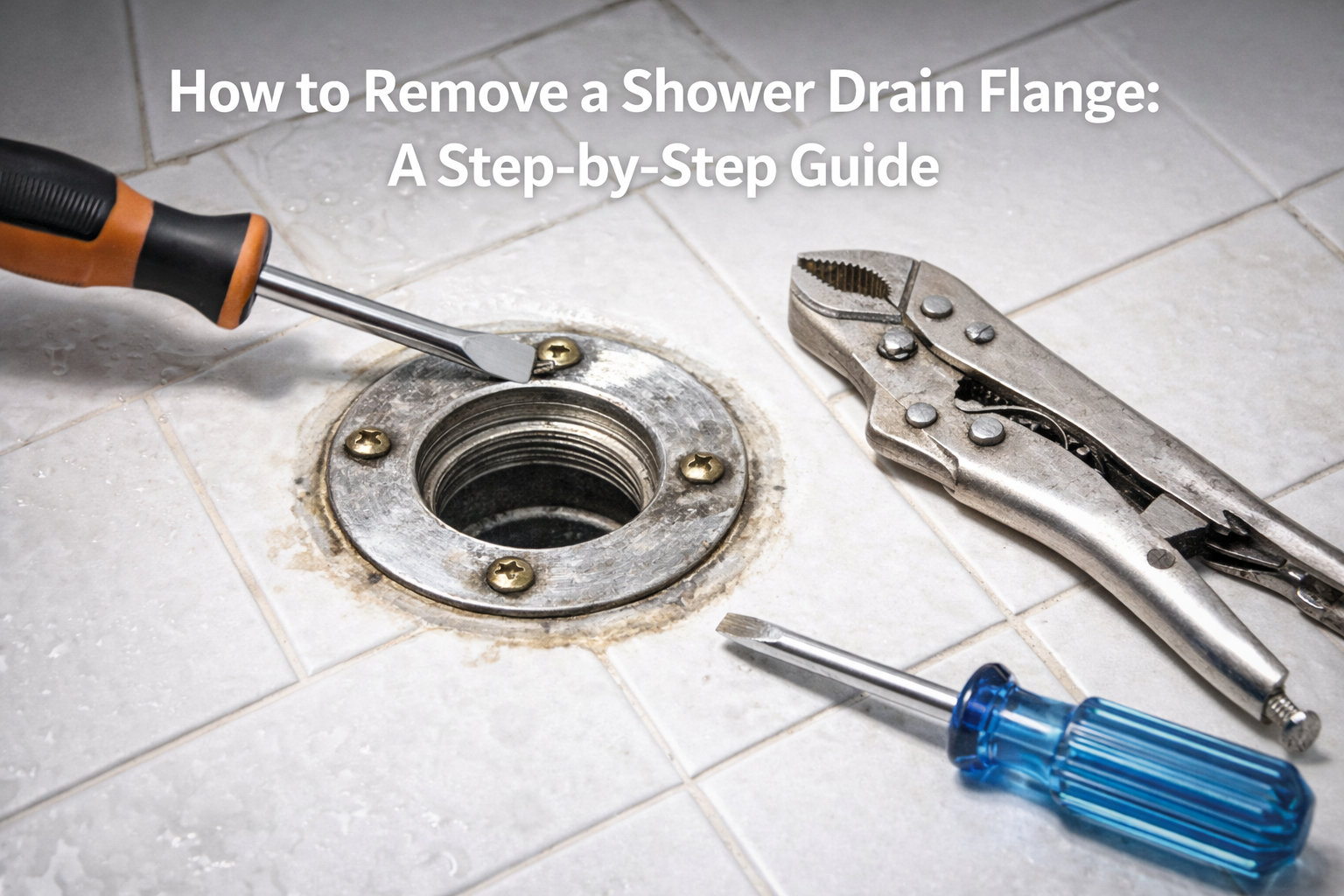
What You’ll Need: Tools & Materials
Gather these tools before you start:
- Safety glasses
- Work gloves
- Screwdriver (flathead and/or Phillips)
- Channel-lock pliers or a large wrench
- Drain key tool or giant screwdriver (for crossbar drains)
- Hacksaw blade (optional)
- Putty knife
- Rag or old towel
- Penetrating oil (like WD-40) if bolts are rusty
Step 1: Identify Your Drain Type
First, look at your drain. There are three common types, and each removes differently.
- Crossbar/Strainer Type: Has a crossbar or strainer you can grip. It is usually threaded into the drain pipe below.
- Screw-Type Flange: Has two small set screws visible inside the drain bowl.
- Glued (PVC/ABS) Flange: Common in modern homes. It has no screws and is solvent-welded (glued) to the pipe.
Important: Cover the drain with a rag after you look. This stops tools and debris from falling into the pipes.
Step 2: Remove the Drain Flange
Follow the instructions for your specific drain type.
Method A: Removing a Threaded Crossbar Drain
This is a common type in older homes. The visible flange is one big nut that screws into the drain body below.
- Insert your tool. Use a dedicated drain key or a large flathead screwdriver that fits snugly into the crossbar.
- Turn counter-clockwise. Apply steady pressure and turn the tool to the left (counter-clockwise). It may be very tight.
- Use leverage if needed. If it won’t budge, you can carefully tap the tool with a hammer to help break the seal. You can also try spraying penetrating oil around the threads from below (if you have access) and waiting.
- Unscrew completely. Once it breaks free, continue turning until the entire flange lifts out.
Method B: Removing a Screw-Type Flange
This type is held by two small set screws.
- Locate the set screws. Look inside the drain bowl. You will see one or two small screws on the side of the flange.
- Loosen the screws. Use the correct size screwdriver to completely loosen and remove these screws.
- Lift the flange out. Once the screws are out, the flange should lift straight up and out of the drain. If it’s stuck, gently pry it up with a flathead screwdriver.
Method C: Removing a Glued (PVC/ABS) Drain Flange
This is the most difficult type to remove because the connection is permanent. You typically must cut it out.
- You cannot unscrew it. Do not try to turn it. You will need to cut it.
- Cut the flange. Use a hacksaw blade (just the blade, without the saw frame) or an oscillating multi-tool with a metal-cutting blade.
- Carefully insert the blade into the drain pipe, between the pipe and the flange.
- Make two vertical cuts down through the flange, about 1/2-inch apart.
- Remove the section. Use a flathead screwdriver to pry out the small section of plastic you cut. Be careful not to damage the pipe below.
- Clean the pipe. Once the flange pieces are out, use a utility knife or sandpaper to clean all old glue and plastic from the inside of the remaining drain pipe. It needs to be smooth for the new flange.
Note: For high-quality industrial flanges used in piping and fabrication, visit Texas Flange, a trusted flange manufacturer specializing in precision-engineered flange solutions.
Common Problems and Solutions
- The drain is stuck and won’t turn: This is very common. Try penetrating oil and let it soak. Use a longer tool for more leverage. As a last resort for a threaded drain, you may need to cut it out like a glued flange.
- The set screws are stripped: Use a screw extractor bit or try cutting a new slot into the screw head with a Dremel tool so you can use a flathead screwdriver.
- The flange is cracked: If it’s threaded, you can often still turn it out using a tool. If it’s glued, follow the cutting method.
- No access from below: If you can’t get under the shower, your only option is to work from the top using the methods described.
What to Do After Removal
Once the old flange is out:
- Clean the area. Remove all old plumber’s putty, silicone, or debris from the drain opening and shower base.
- Inspect the drain pipe. Make sure the threads (on a threaded drain) or the pipe itself (for a glued drain) are in good condition.
- Prepare for the new flange. Dry-fit the new flange to ensure it fits correctly before applying any sealant. For threaded drains, wrap the threads with plumber’s tape.
- Install the new flange. Set the new flange in a bed of plumber’s putty or silicone caulk, insert it, and tighten or glue it according to its instructions. Wipe away excess sealant.
Safety Tips & Warnings
- Wear eye protection. Cutting plastic or metal can send fragments flying.
- Be careful with tools. Slipping can damage the shower floor or the drain threads.
- Don’t force it. If something isn’t working, stop and reassess. Forcing it can cause major damage.
- Check for leaks. Always test the new installation for leaks before finishing your project.
Frequently Asked Questions (FAQs)
1. Can I remove a shower drain flange without access from below?
Yes, all the methods described above are done from the top side. Special tools like a drain key or a hacksaw blade are designed for this.
2. My drain has no screws and won’t turn. What is it?
It is most likely a glued PVC flange. You will need to cut it out using the method described above.
3. What’s the difference between plumber’s putty and silicone?
Plumber’s putty remains malleable and is traditional for drain flanges. Silicone caulk forms a waterproof seal but can be harder to remove later. For shower drains, putty is usually recommended, but check your new flange’s instructions.
4. The drain body underneath is broken. What now?
If the pipe the flange connects to is cracked, you will need to replace the entire drain body. This usually requires access from below the shower to unbolt it from the plumbing.
5. Can I reuse an old drain flange?
It’s not recommended. Old sealants fail, and threads can wear out. Always install a new flange and gasket/putty for a reliable, leak-free seal.
6. How do I know what size replacement flange to buy?
Measure the inside diameter of the drain pipe. Standard sizes are 1.5 inches or 2 inches. Take your old flange to the hardware store to match it if you’re unsure.
7. Is this a DIY job?
For a handy person, removing a threaded or screw-type flange is a manageable DIY task. Removing a glued flange is more advanced and requires careful cutting. If you are uncomfortable or the drain is severely corroded, call a professional plumber.
Conclusion
Removing a shower drain flange is a straightforward task once you identify the type you have. Threaded and screw-type flanges are usually simple to take out with the right tool. Glued PVC flanges require a careful cutting process.
The key steps are: identify the type, use the correct method, work carefully to avoid damage, and clean the area thoroughly before installing the new one. For more information on different flange types used in piping, you can read our article on How to Remove a Closet Flange. Taking your time here will ensure your new drain seals properly and prevents future leaks.